Virtual Reality (VR) is revolutionizing the gaming industry by providing immersive experiences that transport players into the heart of the action. Unlike traditional gaming, VR offers a fully interactive environment where players can engage with the virtual world in a more realistic and engaging way. This article explores how VR is shaping the future of gaming, the technology behind it, and the potential it holds for gamers and developers alike.
The Evolution of Virtual Reality in Gaming
Early Beginnings:
VR concepts have been around since the 1960s, but it wasn't until the 1990s that the first attempts at consumer VR gaming, such as Sega VR and Nintendo's Virtual Boy, were made. These early systems were limited by technology and didn't gain widespread popularity.
Modern Breakthroughs:
The launch of Oculus Rift in 2012 marked a significant breakthrough in VR gaming. With advancements in motion tracking, display technology, and computing power, VR became more accessible and appealing to gamers.
Other major players like HTC Vive, PlayStation VR, and Valve Index soon followed, offering high-quality VR experiences.
Key Components of VR Gaming
Headsets:
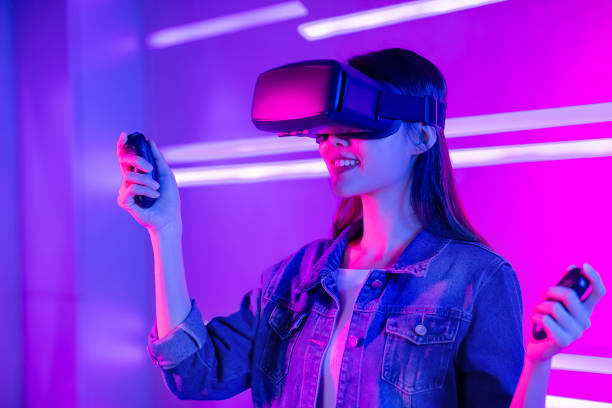
VR headsets are the core of the VR experience, featuring high-resolution displays, wide field-of-view lenses, and integrated motion tracking sensors.
Popular headsets include Oculus Quest 2, HTC Vive Pro, and PlayStation VR.
Motion Controllers:
Motion controllers track hand and arm movements, allowing players to interact with the virtual environment intuitively.
Examples include the Oculus Touch, HTC Vive Controllers, and Valve Index Controllers.
Tracking Systems:
Tracking systems use sensors to monitor the position and orientation of the headset and controllers, ensuring accurate movement representation in the virtual space.
There are different tracking technologies, such as inside-out tracking used by Oculus Quest 2 and external base stations used by HTC Vive.
Haptic Feedback:
Haptic feedback devices provide tactile sensations, enhancing the sense of immersion by simulating physical interactions in the game.
Examples include haptic gloves and vests that respond to in-game events.
The Immersive Gaming Experience
Realistic Environments:
VR games create highly detailed and realistic environments, making players feel as though they are truly inside the game world.
Advanced graphics, spatial audio, and interactive elements contribute to the immersive experience.
Intuitive Gameplay:
VR allows for natural and intuitive interactions, such as grabbing objects, aiming weapons, and navigating the virtual space using physical movements.
This level of interaction can make gameplay more engaging and enjoyable.
Social VR:
VR also offers social experiences, allowing players to interact with friends and other gamers in virtual spaces.
Platforms like VRChat and Rec Room enable socialization, collaborative gameplay, and even virtual events.
Popular VR Games and Experiences
Action and Adventure:
A rhythm-based game where players slash blocks to the beat of the music.
A first-person shooter set in the Half-Life universe, praised for its immersive gameplay and storytelling.
Simulation and Exploration:
An open-world exploration game that allows players to explore an infinite universe.
A survival horror game set in the post-apocalyptic world of The Walking Dead.
Puzzle and Strategy:
A puzzle-platformer featuring a small mouse on an epic adventure.
A unique first-person shooter where time moves only when the player moves.
Fitness and Wellness:
A VR fitness game that offers boxing, dance, and HIIT workouts.
A boxing simulator that provides an intense workout.
The Future of VR in Gaming
Technological Advancements:
As technology continues to advance, we can expect even more realistic graphics, better motion tracking, and more comfortable and lightweight headsets.
Improvements in wireless technology will make VR setups more convenient and accessible.
Broader Accessibility:
The cost of VR equipment is gradually decreasing, making it more affordable for a wider audience.
Standalone VR headsets like the Oculus Quest 2 eliminate the need for a powerful gaming PC, further lowering the entry barrier.
Expanding Content:
The growing popularity of VR is driving developers to create a diverse range of VR games and experiences.
From AAA titles to indie games, the VR content library is expanding rapidly.
Integration with Other Technologies:
The integration of VR with other emerging technologies like augmented reality (AR), artificial intelligence (AI), and the Internet of Things (IoT) could lead to new and innovative gaming experiences.
Mixed reality (MR) experiences that combine VR and AR elements could become more prevalent.






.jpg)






Leave a Comment