Search

Saved articles

You have not yet added any article to your bookmarks!

Browse articles
Newsletter image

Subscribe to the Newsletter

Join 10k+ people to get notified about new posts, news and tips.

Do not worry we don't spam!

GDPR Compliance

We use cookies to ensure you get the best experience on our website. By continuing to use our site, you accept our use of cookies, Privacy Policy, and Terms of Service.

The Rise of Electric Vehicles (EVs) in the USA: A Comprehensive Guide to EV Models, Charging Infrastructure, and the Road to Sustainability

1. EV Models:

  • Tesla: Tesla is one of the most well-known EV manufacturers, with models like the Model 3, Model Y, Model S, and Model X. These vehicles offer long ranges, impressive acceleration, and advanced autonomous driving features.

  • Chevrolet: Chevrolet's Bolt EV provides an affordable option with a substantial driving range. The Bolt EUV is a newer addition to the lineup.

  • Nissan: The Nissan Leaf is one of the earliest mass-market EVs and is available in various versions, including the Leaf Plus.

  • Ford: Ford offers the Mustang Mach-E, an all-electric SUV, and the upcoming all-electric Ford F-150 Lightning.

  • Volkswagen: Volkswagen's ID.4 is a compact electric SUV that aims to bring electric mobility to a broader audience.

  • Audi: Audi's e-tron and e-tron Sportback offer luxury and performance in the EV space.

  • Rivian: Rivian is an American EV startup known for its R1T electric pickup truck and R1S electric SUV.

  • Porsche: Porsche's Taycan is a high-performance electric sports car, demonstrating that EVs can offer both speed and luxury.

  • Lucid Motors: Lucid's Air is a luxury electric sedan with a focus on advanced technology and premium features.

  • Hyundai/Kia: These automakers offer multiple electric models, including the Hyundai Kona Electric and Kia Niro EV.

2. Charging Infrastructure:

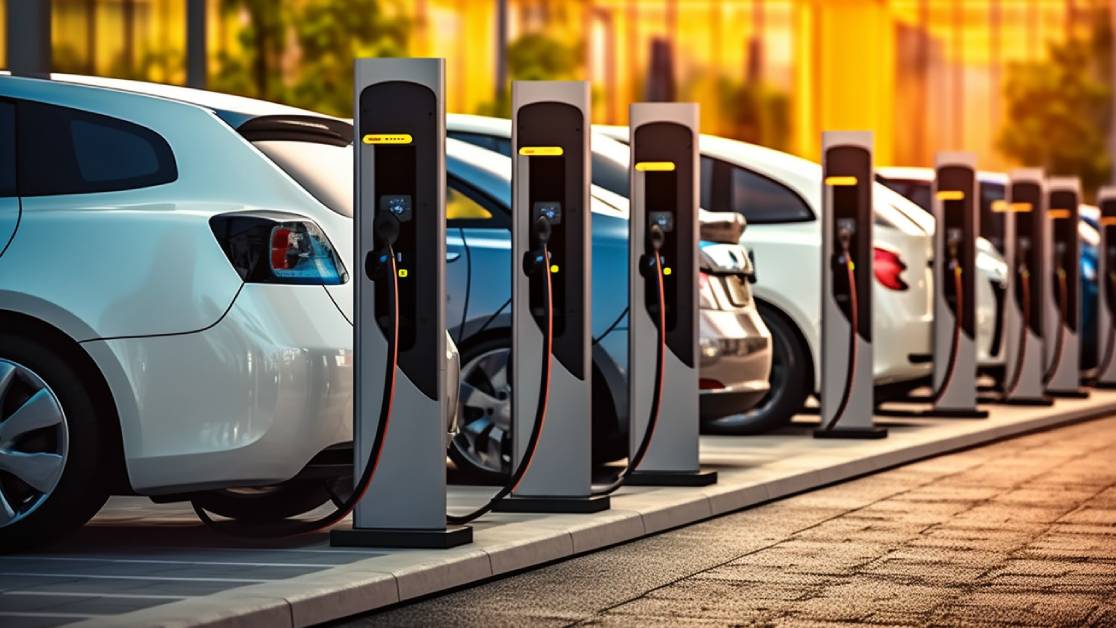
  • Public Charging: The USA has an expanding network of public EV charging stations, including Level 2 chargers and fast-charging DC stations. Major charging networks like EVgo, ChargePoint, and Electrify America provide convenient access.

  • Home Charging: Many EV owners charge their vehicles at home using Level 1 or Level 2 chargers. Home charging is convenient and cost-effective.

  • Battery Swapping: Some companies are exploring battery-swapping stations as a quick alternative to recharging.

  • Charging Speeds: Charging times vary depending on the charger's speed and your vehicle's battery capacity. Level 2 chargers can take several hours for a full charge, while DC fast chargers provide much quicker charging.

3. Environmental Benefits:

  • EVs produce zero tailpipe emissions, reducing air pollution and greenhouse gas emissions.

  • The use of renewable energy for charging further decreases the carbon footprint of EVs.

  • EVs have lower operating costs due to fewer moving parts, reducing the overall cost of ownership.

4. Government Incentives:

  • Federal and state governments offer incentives to promote EV adoption, including tax credits, rebates, and access to carpool lanes.

  • Government initiatives also aim to expand charging infrastructure and research new battery technologies.

5. Sustainability and Challenges:

  • While EVs offer environmental benefits, challenges remain, such as the production of batteries, raw material sourcing, and recycling.

  • EV manufacturers are working on sustainable practices, including battery recycling and responsible sourcing of materials.

6. Future Trends:

  • Electric vehicles are expected to become more affordable, with greater range, and faster charging times.

  • Automakers are developing electric trucks and SUVs to cater to a wider audience.

  • Advances in battery technology, like solid-state batteries, promise increased energy density and longer lifespans.

The rise of electric vehicles in the USA represents a significant shift toward sustainability and clean transportation. As technology continues to evolve and charging infrastructure expands, the adoption of EVs is likely to accelerate, contributing to reduced emissions and a more sustainable future for transportation.


Prev Article
2024 U.S. Presidential Election: Key Players, Pote...
Next Article
The Evolution of American Motorcycles: Iconic Bran...

Related to this topic:

Comments (0)

Leave a Comment