Step 1: Define Your Podcast Concept
-
Choose Your Niche: Decide on the subject or niche you want to explore in your podcast. Consider your interests, expertise, and the interests of your target audience.
-
Identify Your Unique Angle: Research other podcasts in your chosen niche and find a unique angle or perspective that sets your podcast apart.
Step 2: Plan Your Podcast
-
Name Your Podcast: Choose a catchy and memorable name that reflects your content and resonates with your audience.
-
Create an Outline: Plan the format of your episodes, including the structure, segments, and episode length. Consider whether you'll have guests or co-hosts.
-
Episode Topics: Create a list of episode topics and content ideas to ensure a consistent release schedule.
Step 3: Gather Your Podcast Equipment
-
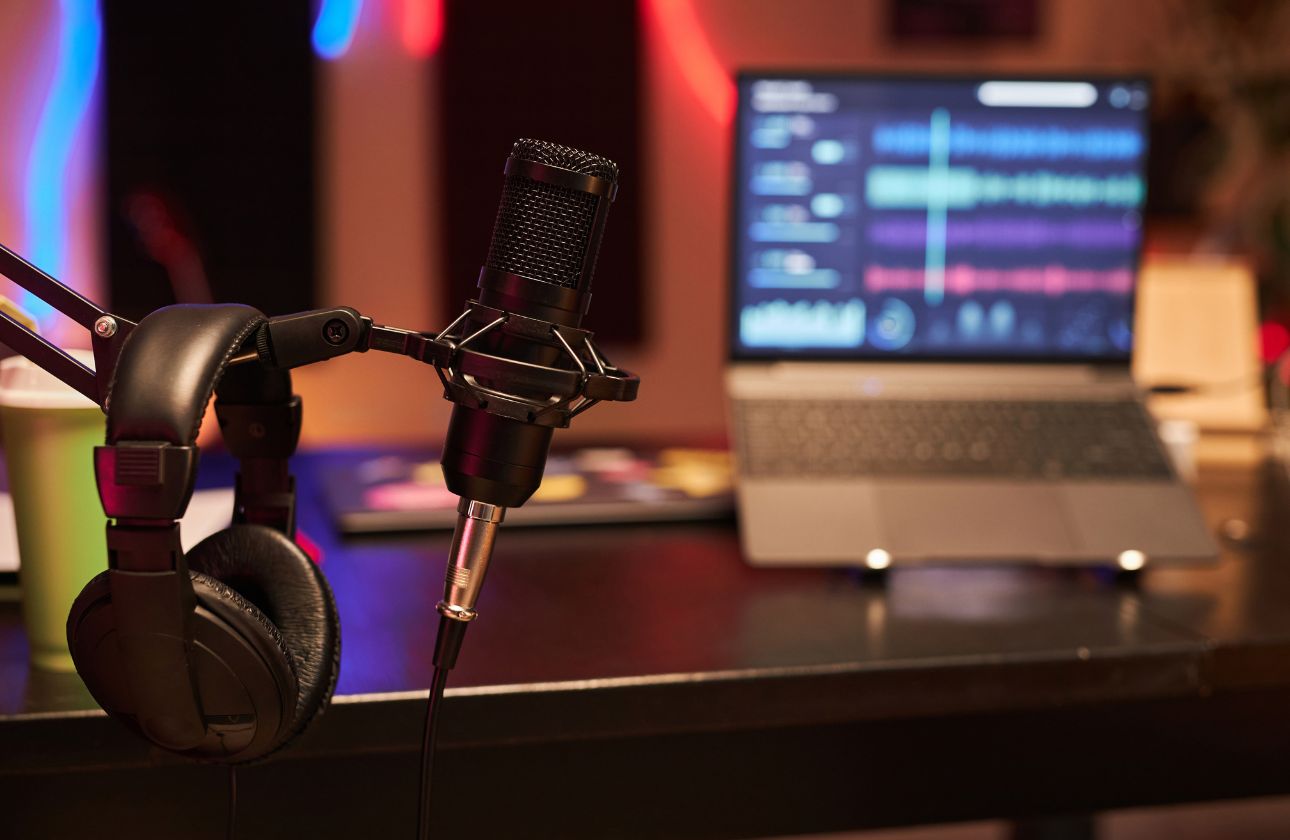
Microphone: Invest in a good-quality microphone for clear audio. USB microphones are a cost-effective choice for beginners.
-
Headphones: Use closed-back headphones to monitor audio quality while recording.
-
Pop Filter: A pop filter reduces plosive sounds when speaking into the microphone.
-
Audio Interface: If you choose an XLR microphone, you'll need an audio interface to connect it to your computer.
Step 4: Choose Recording and Editing Software
-
Recording Software: Use recording software like Audacity (free), Adobe Audition, or GarageBand (for Mac users) to capture and edit audio.
-
Editing Software: Use audio editing software to enhance audio quality, add music, and edit out mistakes or background noise.
Step 5: Record Your Podcast
-
Find a Quiet Space: Choose a quiet, acoustically treated space for recording. Minimize background noise and echo.
-
Prepare Your Script: Write a script or outline to guide your episode, but don't be too rigid. Maintain a conversational tone.
-
Record and Edit: Record your episode, and then edit it to improve audio quality and remove any mistakes or long pauses.
Step 6: Create Podcast Artwork and Intro Music
-
Podcast Artwork: Design eye-catching podcast artwork that represents your brand and content. Ensure it meets the podcast directory requirements.
-
Intro Music: Compose or license intro music for your podcast. It should be brief, catchy, and set the tone for your show.
Step 7: Host Your Podcast
-
Choose a Podcast Hosting Service: Sign up for a podcast hosting service like Podbean, Libsyn, or Anchor. These services store your podcast files and distribute them to directories like Apple Podcasts and Spotify.
-
Upload Your Episodes: Upload your episodes to your hosting platform. Ensure they are properly tagged with episode titles, descriptions, and metadata.
Step 8: Publish and Promote Your Podcast
-
Submit to Podcast Directories: Submit your podcast to popular directories like Apple Podcasts, Spotify, Google Podcasts, and Stitcher. Each directory has its submission process.
-
Promote Your Podcast: Use social media, your website, email newsletters, and other marketing channels to promote your podcast. Engage with your audience and encourage them to share.
-
Consistent Schedule: Establish a consistent release schedule to keep your audience engaged.
Step 9: Engage with Your Audience
-
Encourage Feedback: Encourage your listeners to leave reviews and ratings on podcast directories and share their feedback. Respond to comments and emails.
-
Build a Community: Create a website or social media profiles for your podcast to build a community around your content.
Step 10: Monitor and Improve
-
Analytics: Use podcast analytics to track your performance. This can help you understand your audience, measure growth, and identify trends.
-
Feedback and Learning: Continuously seek feedback, learn from your experiences, and refine your podcast to make it better over time.
Starting a podcast may have a learning curve, but with persistence, it can become a fulfilling creative outlet and a powerful platform for sharing your voice and ideas with the world.
Prev Article
Cross-Platform App Development
Next Article
The Art of Writing Engaging Short Stories: Tips fo...









Leave a Comment