
Search

Saved articles

You have not yet added any article to your bookmarks!

Browse articles
Newsletter image

Subscribe to the Newsletter

Join 10k+ people to get notified about new posts, news and tips.

Do not worry we don't spam!

GDPR Compliance

We use cookies to ensure you get the best experience on our website. By continuing to use our site, you accept our use of cookies, Privacy Policy, and Terms of Service.

The History of the Internet

1. The Birth of the Internet (1960s - 1970s):

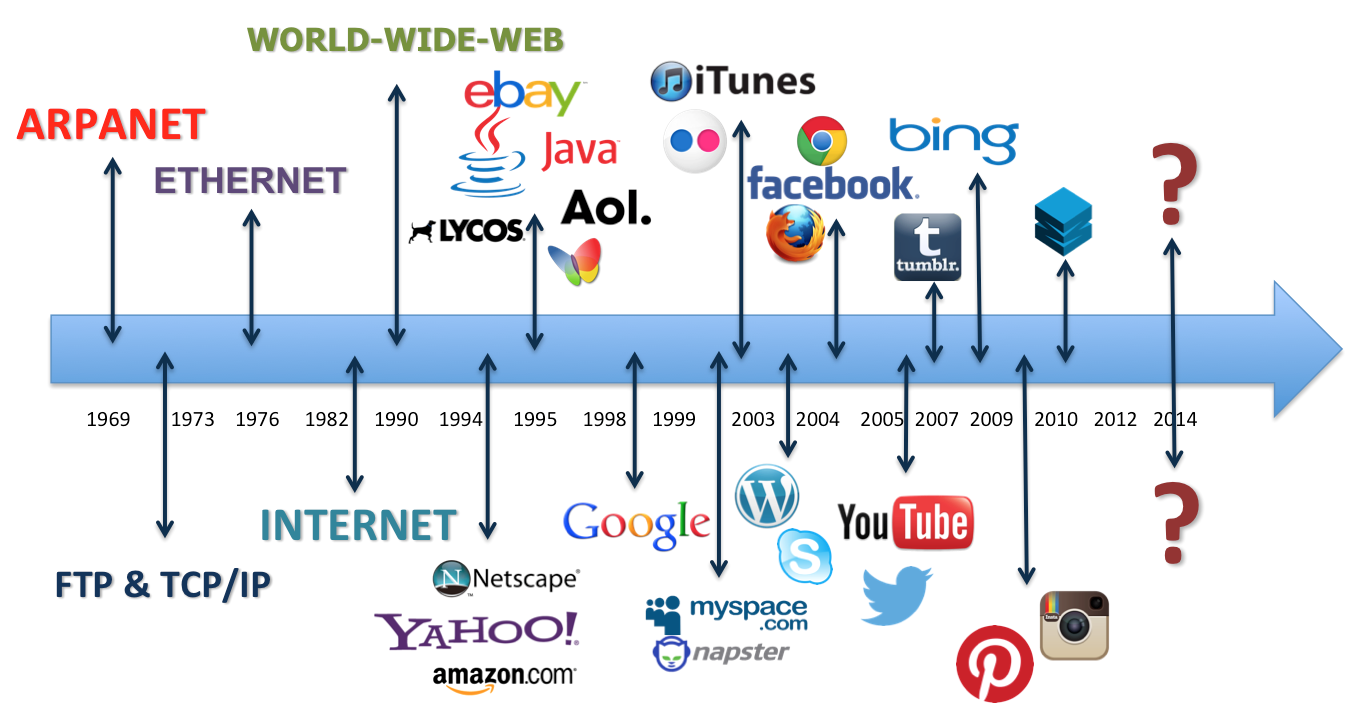
  • The internet's origins can be traced back to the U.S. Department of Defense's ARPANET project in the 1960s. It aimed to create a decentralized communication network that could withstand a nuclear attack. ARPANET became the foundation for the internet.

2. Protocols and Email (1970s - 1980s):

  • The development of key internet protocols, including TCP/IP, allowed different networks to interconnect, forming the basis of the modern internet. The first email system was created, revolutionizing communication.

3. The World Wide Web (1989):

  • Tim Berners-Lee's invention of the World Wide Web introduced the concept of web pages and URLs, making it easier for people to access and share information. The first website went live in 1991.

4. Commercialization and Dot-Com Boom (1990s):

  • The internet expanded rapidly in the 1990s, and the dot-com boom brought a surge of internet-based companies. E-commerce, online services, and search engines like Google emerged.

5. Broadband and Mobile Internet (2000s):

  • The 2000s saw the widespread adoption of broadband internet, offering faster and more reliable connections. Mobile internet access through smartphones became increasingly common.

6. Social Media and Online Communities (2000s - 2010s):

  • Social media platforms like Facebook, Twitter, and LinkedIn transformed the way people connect and share information. Online communities and forums allowed individuals to find like-minded people around the world.

7. Cloud Computing (2010s):

  • Cloud computing services like Amazon Web Services (AWS) and Microsoft Azure revolutionized data storage, processing, and accessibility, enabling businesses to scale and innovate more efficiently.

8. Internet of Things (IoT) (2010s):

  • The IoT connected everyday devices to the internet, enabling smart homes, wearable technology, and more. These devices collect and share data to improve convenience and efficiency.

9. E-Learning and Remote Work (2020s):

  • The COVID-19 pandemic accelerated the adoption of remote work, online education, and telehealth services, highlighting the internet's role in maintaining connections and access to essential services.

10. Challenges and Concerns: - The internet has also brought challenges, including issues related to online privacy, cybersecurity, misinformation, and the digital divide, which is the gap in internet access and skills between different populations.

11. Future Developments: - The internet continues to evolve with emerging technologies such as 5G, artificial intelligence, and blockchain. These innovations have the potential to reshape industries and further integrate the digital world with everyday life.

The history of the internet is a testament to human innovation and connectivity. It has revolutionized the way we work, learn, communicate, shop, and entertain ourselves. As the internet's reach continues to expand, its impact on society and the global economy will only become more profound, shaping the future of our interconnected world.

Prev Article
How to Choose the Right Smartphone
Next Article
Search Engine Optimization (SEO)

Related to this topic:

Comments (0)

Leave a Comment