The concept of preserving culturally and historically significant sites for future generations is not a new one. However, the establishment of the World Heritage Sites initiative has provided a structured and internationally recognized framework for identifying, protecting, and promoting such places of outstanding universal value. Let's delve into the origins, criteria, and significance of this initiative, as well as explore some of the remarkable sites it encompasses around the globe.
Origins and Collaboration: The World Heritage Sites initiative was born out of the collective efforts of UNESCO (United Nations Educational, Scientific and Cultural Organization), an agency of the United Nations, and its member states. The idea was to create a list of sites that hold exceptional cultural or natural significance to humanity as a whole, irrespective of political boundaries. The initiative was formally established in 1972 with the adoption of the UNESCO World Heritage Convention during the 17th session of the General Conference of UNESCO in Paris, France.
Since its inception, the initiative has relied on collaboration between countries, experts, and various stakeholders to identify and safeguard these precious sites. Governments play a crucial role in nominating sites within their territories, while UNESCO provides technical assistance, coordination, and oversight.
Criteria for Selection: To be considered for inclusion on the list of World Heritage Sites, a location must meet one or more of the following criteria:
-
Cultural Significance: This criterion encompasses sites that represent a masterpiece of human creative genius, bear witness to a significant stage in human history, or exhibit exceptional cultural exchange, among others.
-
Natural Significance: Sites falling under this criterion are those of outstanding natural beauty or ecological importance, including unique ecosystems, geological formations, or habitats of endangered species.
-
Mixed Significance: Some sites possess both cultural and natural value, making them eligible under this criterion. These sites often showcase the harmonious interaction between human civilization and the natural environment.
In addition to meeting these criteria, nominated sites must also demonstrate adequate measures for their protection and management.
Global Impact: The designation of a site as a World Heritage Site brings several benefits. It raises awareness about the importance of preserving cultural and natural heritage, encourages sustainable tourism and economic development in the surrounding regions, and fosters international cooperation in heritage conservation efforts. Furthermore, inclusion on the list often results in increased funding and resources for the maintenance and protection of these sites.
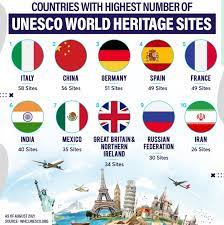
World Heritage Sites Around the Globe: As of 2024, there are 1199 World Heritage Sites spread across 168 countries. These sites encompass a diverse range of cultural, natural, and mixed properties, each offering unique insights into the richness and diversity of our planet's heritage. Some notable examples include:
List of World Heritage Sites count by coutry
From the awe-inspiring pyramids of Egypt to the lush rainforests of the Amazon, and from the ancient city of Petra to the iconic Great Barrier Reef, these sites represent humanity's collective legacy and the need to preserve it for generations to come.
In conclusion, the World Heritage Sites initiative stands as a testament to our shared commitment to safeguarding the world's most precious treasures. By recognizing and protecting these sites, we not only preserve our past but also enrich our present and future. As we continue to face new challenges, it is imperative that we uphold this commitment and ensure that these irreplaceable legacies endure for centuries to come.
Prev Article
The History and Recipe of the World's Yummiest Pas...
Next Article
Unleashing Creativity The Power of Innovation











Leave a Comment